Reposting this article from Mohammad Hafiz Jamaluddin on LinkedIn
Most conversations about growing the global Halal economy focus on market size, export numbers, and certification standards.
I want to talk about something that happens much earlier — the quiet moment when a business decides it’s simply too hard and walks away.
A scenario most people don’t think about.
A Malaysian entrepreneur wants to open a Halal-certified Japanese restaurant. Exciting concept. Real market demand. Legitimate business intent.
Then reality hits.
Wasabi cannot be grown in Malaysia. Which means the ingredient must be sourced from outside — and for the restaurant to qualify for Halal certification, that wasabi must come from a supplier certified by a body recognised by JAKIM.
So the search begins.
They know what they need. But finding a specific supplier — one whose Halal certification is actually recognised within the JAKIM ecosystem — is where the process quietly become daunting. Not because the certified supplier doesn’t exist. But because that supplier is invisible.
Maybe their product listing is in Japanese. Maybe it’s in Arabic. Maybe it simply never appears in an English-language search at all.
The entrepreneur types “halal wasabi supplier” into Google. What comes back is noise. The certified supplier they need is out there — but the language their product is catalogued in doesn’t match the language being searched. The algorithm finds nothing. The business either compromises on compliance, or gives up entirely.
This isn’t just a Japanese restaurant problem.
Scale it up. Every day, Malaysian manufacturers and international companies face the same wall when they need to source ingredients that cannot be produced locally. Every certified supplier whose information exists only in their native language is effectively removed from the global Halal supply chain — not by policy, not by cost, but by discoverability.
JAKIM recognises 97 Foreign Halal Certification Bodies across the globe. The supply network is broader than most people realise. But a recognised certification means nothing commercially if the suppliers carrying that certification cannot be found by the businesses that need them.
The certification bottleneck most people blame on bureaucracy is, in reality, a discovery and language problem.
Having a website is not the same as being discoverable.
Here’s something even established businesses get wrong.
You might already have a website. You might already rank reasonably well on Google. But being findable on the open internet and being discoverable within the Halal supply chain are two entirely different things.
A general website gets you found by general searches. It carries no certification context, no supply chain validation, and no visibility to the procurement teams and buyers who are specifically searching for JAKIM-recognised, Halal-compliant suppliers.
Being inside a verified, centralised Halal ecosystem means you’re not competing for attention against millions of irrelevant search results. You’re positioned exactly where serious buyers are already looking — with your certification credentials front and centre.
Whether you’re a Malaysian SME, a multinational ingredient supplier, or an international company wanting to tap into Malaysia’s Halal market, the question isn’t just “can people find me online.”
The question is: “Can the right buyers find me, in the right context, with the right validation?”
This isn’t theory. We just did it.
Earlier this month, we worked with a Jakarta-based F&B group that was preparing to open their restaurant in Malaysia. Before they could even think about launching, they had a sourcing problem: 160 SKUs, all requiring Halal-certified local suppliers.
Manually, that search would have taken months. Supplier by supplier. Phone call by phone call. With no guarantee that what they found was correctly certified or commercially ready.
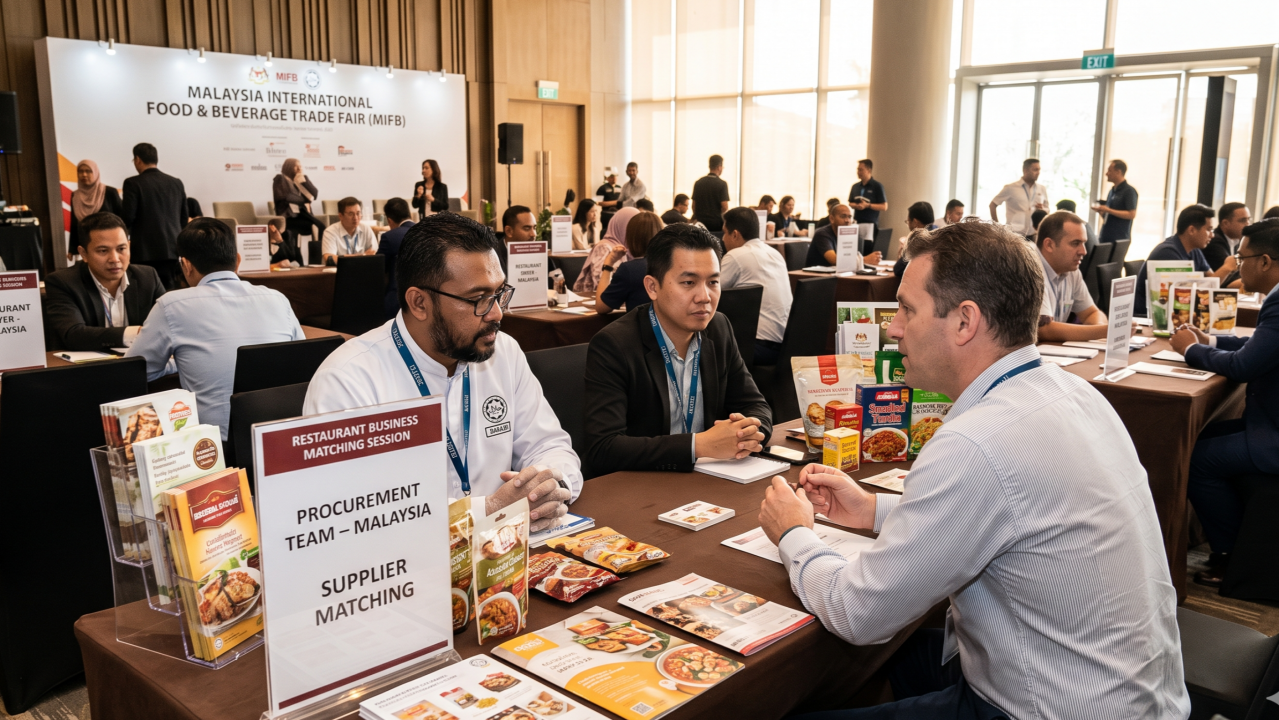
Using HaNa, we identified 120 unique Halal-certified Malaysian suppliers across all 160 SKUs — and within two weeks, we had organised a physical pitching session in Kuala Lumpur, held on 8 and 10 June 2026, where suppliers presented directly to the company’s procurement team.
Negotiations are currently ongoing, and the restaurant is on track to open in August 2026.
Two weeks. 120 suppliers. One structured, validated, face-to-face session.
That is what intelligent sourcing looks like when the infrastructure is in place.
The fix cannot be a better Google search.
What’s needed is a centralised, structured ecosystem where certified suppliers — regardless of their country or language — are indexed, validated, and searchable in a way that procurement teams can actually use.
That is exactly what Halal Integrated Platform (HIP) and Halal Navigator (HaNa) are built to do.
HIP brings certified suppliers into a unified, verified database — creating a structured digital presence that is discoverable within the Halal supply chain specifically. For businesses already online, HIP amplifies that visibility into the one place it matters most. For the many suppliers who have no web presence at all, HIP gives them an immediate, credible entry point into global Halal commerce.
HaNa sits on top as the intelligence layer. A procurement team searching for halal wasabi in English will surface suppliers whose listings exist in Japanese, Mandarin, or Arabic — because HaNa bridges the language gap that kills the search before it starts. It matches on specification and certification status, not just keyword.
Together, they transform what is currently a manual, frustrating, frequently-failed sourcing process into something that actually works.
The opportunity hiding inside this problem.
Every business that abandons its Halal certification journey due to sourcing friction is a lost node in the global Halal supply chain. Multiply that across thousands of SMEs in Malaysia and internationally, and the economic cost of this invisible bottleneck is staggering — even if it never shows up in any official report.
Fixing discoverability doesn’t just help individual businesses. It expands the entire certified supply network, which accelerates certification uptake, which grows the ecosystem Malaysia is trying to lead.
A Halal certificate proves you meet the standard.
But if the world can’t find the ingredients to meet that standard — or can’t find you when they’re looking — the opportunity is lost before it begins.
Two things you can do right now:
If you’re a supplier, manufacturer, or brand — Malaysian or international — register your business on HIP at hip.hdcglobal.com. Put yourself where serious Halal buyers are already searching.
If you’re looking to find leads, secure meetings, or break into the Malaysia Halal market — send me a DM. Let’s talk about how HaNa can work for you.
The market is there. The buyers are looking. The only question is whether they can find you.
#HalalIndustry #SupplyChain #HalalCertification #JAKIM #MalaysiaHalal #DigitalTransformation #HalalIntegratedPlatform #HaNa #SMEGrowth #B2BProcurement #HalalExport #FoodIndustry